International investors are "unable" to invest in Ireland's housing sector while there remains uncertainty and political pressure around the regulatory framework for residential development, Elkstone has said.
In its Sate of Private Markets Report, the investment firm opined that rental caps as well as rising construction and financing costs are to blame for Ireland's development pipeline "stalling" despite the pressing need for new housing.
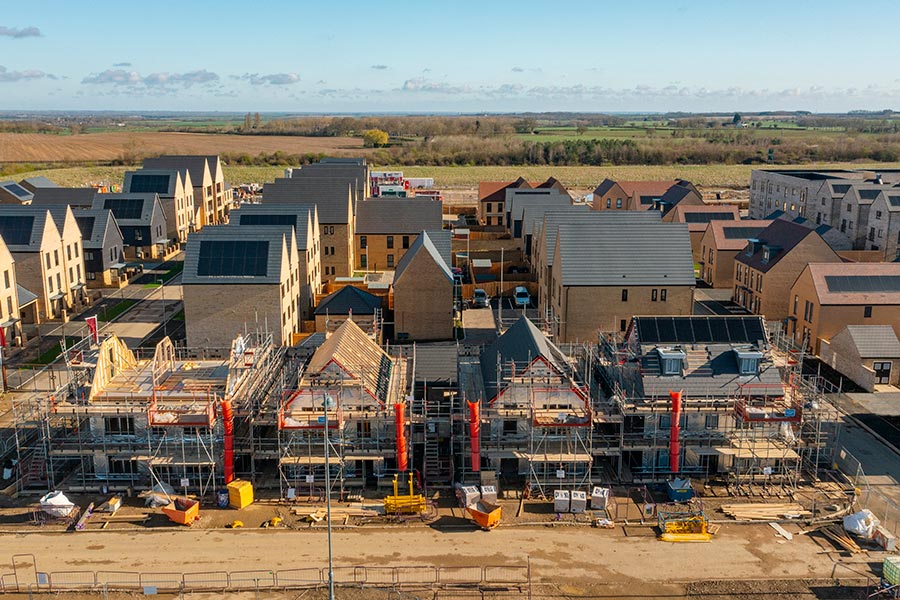
Just over 30,000 new homes were constructed last year, down 6.7% from 2023 and far short of the 40,000 projected in the lead up to the general election last November.
The level of new housing required to make up the shortfall has grown as a result, with Davy forecasting that 93,000 new homes will be required each year to accommodate a population of 6m by 2031.
Elkstone said there is increasing appetite among investors globally to deploy capital in European housing markets.
Regulations, however, have created "a paradoxical situation where, despite clear structural supply deficits similar to other European markets, Ireland's development pipeline is stalling precisely when new housing is most desperately needed, creating both challenges and opportunities for innovative financing solutions."
In 2024, real estate transaction activity increased 30% led by retail (+43%) and industrial/logistics (+21%). Elkstone has projected that prime real estate sector yields will stabilise at 5% for offices/logistics properties and 4.75% for residential assets this year.
“Rental caps introduced with the intention of protecting vulnerable tenants in our tight housing market have created an unintended consequence, by capping growth for rent and investments," said Karl Rogers, chief investment officer at Elkstone.
"Increasing construction and financing costs are becoming locked into projects, making many developments financially unviable for developers. This roadblock will continue to impact new housing supply and ultimately prolong the housing shortage.
"At present, the state is one of the few funding options to increase supply, through the LDA and AHB capital allocations."
Rogers said that "to break this cycle" Ireland should created a new long-term regulated vehicle for institutional investment that would "provide much-needed certainty on regulation, fund design, and tax rates—establishing a framework that can attract investment capital while maintaining appropriate protections for tenants."
The report shows that the 10 private equity funds in the market captured 36% of total buyout capital raised last year, driving a 34% reduction in North American buyout fundraising overall.
Global venture capital fundraising fell to a seven-year low of $169.7bn in 2024 as capital flowed predominantly to 'mega funds' such as Sequoia's recently closed $20bn fund.
Ireland, however, saw notable activity with multiple €40m deals in 2024. There was also a rebound in financing activity, which Elkstone said demonstrated he resilience of the country's innovation ecosystem.
It also highlighted the "minimal" allocation of pension fund and institutional money to venture capital as "a structural disadvantage" for Ireland and suggested greater EIIS tax relief benefits could help increase private capital from personal investors into the sector, reducing reliance on US multinationals.
"The flight of capital to mega funds represents a defensive positioning by investors, but history shows that periods of market caution often precede strong returns," said Rogers.
"Ireland is not home to mega-funds, which places even greater importance on government and local capital funds. Backing smaller domestic fund champions is incredibly important, as private capital flows are only going to mega funds."
Elsewhere, Elkstone has identified that the moratorium on data centre development in Ireland has redirected investment to competing European markets while presenting an opportunity for investors to back renewable energy projects that may alleviate capacity constraints and help Ireland meet its climate targets,
Additionally, the company said demand from AI-optimised data centres creates both urgency for infrastructure upgrades and potential for significant returns on early investments.
"The data centre moratorium isn't about Ireland missing the boat – it's a consequence of our early success in attracting global tech firms," said Rogers.
"However, this success has brought to light a significant national grid supply problem requiring urgent attention. If we do not prioritise strategic investments in increasing the supply capacity of our national grid, Ireland faces challenges in remaining ahead in our ability to support data-driven technology companies.
"There is an opportunity to solve the grid supply gap - meet the request for greater demand- by increasing our investment in renewables."
More widely, the report shows that public markets, powered by surging investor interest in 'Magnificent 7' tech stocks, outperformed private markets for the first time in 22 years in 2024.
The Irish economy has been forecast to grow 4.2% in GDP terms this year, outpacing the eurozone (4.1%). However, much as in the stock market, the Trump tariffs have created economic uncertainty.
"By channeling domestic capital toward our most pressing challenges – housing, infrastructure, and indigenous innovation – we can build a more resilient economy less dependent on external factors," Rogers concluded.
(Pic: Getty Images)