The UK has signalled that it is open to joining an EU trading partnership as the bloc tries to cajole Britain into setting out what it wants from the Brexit reset, write Luke McGee and Chloe Chaplain.
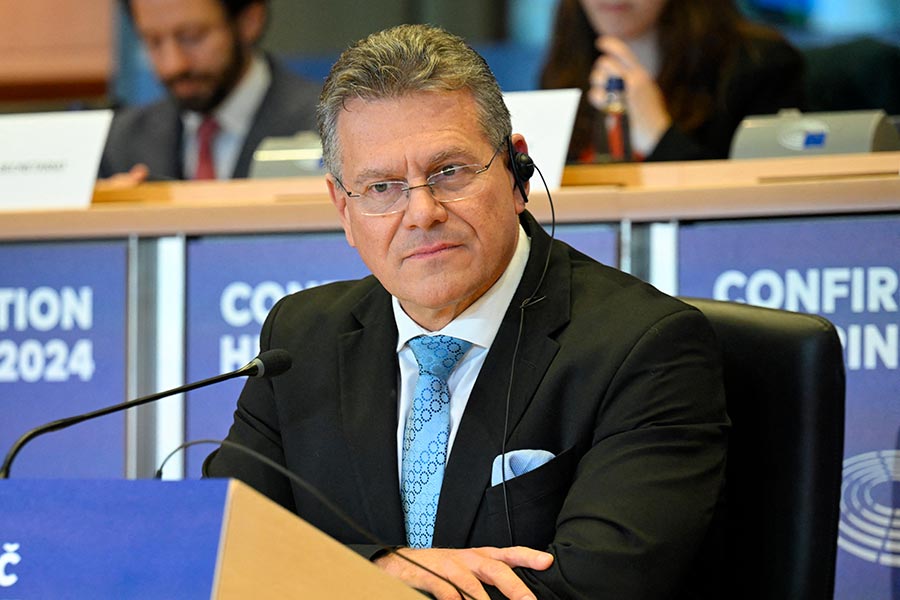
Maros Sefcovic, the European Union's chief negotiator on post-Brexit relations, said Brussels "could consider" allowing the UK to join the Pan-Euro-Mediterranean Convention (PEM).
The customs scheme would lower trade barriers between Britain and the bloc as well as with other nations.
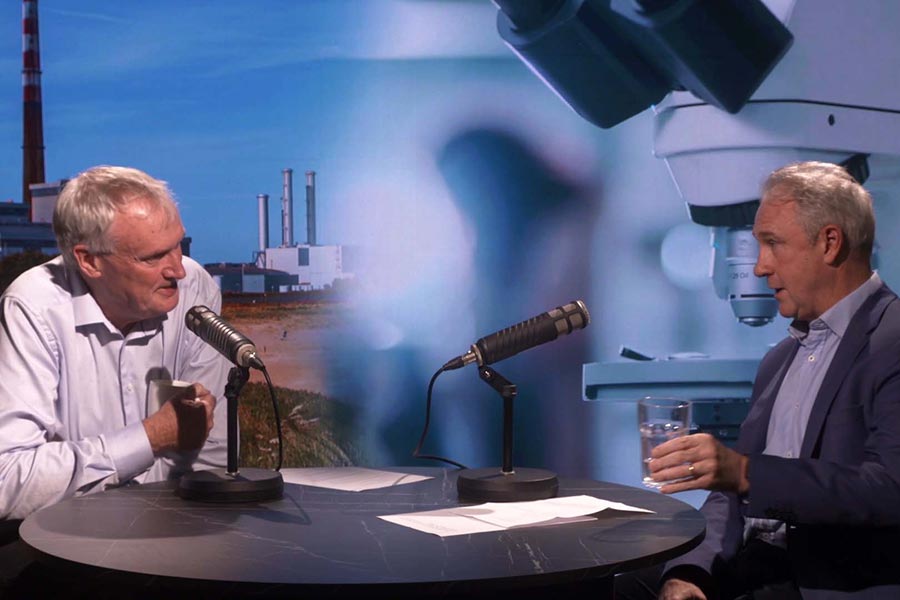
Speaking to the BBC at the World Economic Forum in Davos, Sefcovic said that while nothing is certain, the EU would consider allowing the UK to join the PEM Convention.
Responding, Downing Street said such a scheme is not a "customs union" and therefore would not breach the Government's "red lines".
The Prime Minister's spokesman said he would not comment on specific options up for discussion with the EU in negotiations.
But, asked if it would cross the red lines set out in Labour's manifesto for EU ties, he said: "The arrangement that's been discussed is not a customs union.
"Our red line has always been that we will never join a single market, freedom of movement, but we're just not going to get ahead of those discussions."
Privately, when asked by The i Paper, the Government declined to rule out joining PEM.
Downing Street's comments left the door open to such an agreement being on the table as part of the Brexit reset discussions.
No 10 added that the Government had always said it wanted to "look at ways to reduce barriers to trade whilst remaining within our clear red lines, not rejoining the Single Market, not rejoining the Customs Union, we are not going to be returning to freedom of movement”.
But both Government sources and trade experts have been quick to point out that it is not a customs union nor an EU scheme.
Sources in London and Brussels say that Sefcovic’s comment might be read as the EU making a move ahead of the UK-EU summit later this year, proposing something that is relatively easy to do and for which there would broadly be support.
EU officials and lobbyists in Brussels have been frustrated at the British Government’s perceived reluctance to say exactly what it wants from the so-called Brexit reset.
Simon Usherwood, a professor of politics and international studies at the Open University, said: “The simplest explanation for these comments is that the EU Commission wants something to show at the summit in the face of inertia in the UK.”
There had been high hopes that Keir Starmer’s Government would go out of its way to restore trust between London and Brussels.
And while his trips to the continent and warmth to the EU have been well received, there is still significant scepticism of British politicians in Brussels, with many EU officials still furious that the UK has failed to fully implement the Brexit deal agreed in 2019.
David Henig, director of the UK trade policy project at the European Centre for International Political Economy, said: “PEM would facilitate UK participation in Europewide manufacturing supply chains.
“It would help both exporters and importers of goods, and is supported by non-EU countries like Switzerland and Morocco.
“It is not an economic game-changer, but it is something the UK should do.”