Ah, rosé. It’s a wine after my own heart and it’s hugely popular here in Ireland, especially in summer, writes Jordan Mooney.
You don’t need the sun to be shining to enjoy a tipple, though.
For some reason, rosé has gained a weird reputation: that it’s just pink water, only for women and a lesser quality wine.
This is simply not true.
Not only is rosé an equal opportunist, but it has just as much breadth and depth as other styles.
Firstly, those almost-neon pink wines you might remember from years gone past are not the ones I’m talking about.
While the hues of good rosé sway from pale blush to deep, dusky rose, artificially fuschia bottles with heaps of added sugar are usually best avoided.
Rosé is not typically made by mixing together red and white wine.
It’s actually illegal to do so in France, except in Champagne.
Typically, rosé is made with the skin-contact method, just like red wine.
This means that grapes are crushed and the liquid is left in contact with the skins for a short period of time, usually up to a day, before being removed ahead of fermentation.
For red wine, the skins are usually left in for fermentation.
Another way of making rosé is the saignée method, meaning ‘to bleed’ in French, which is when a portion of the wine juice is removed after skin contact during red wine production.
The separated juice is left to ferment and become rosé, while the more concentrated remainder is used to make red wine.
So now that you know how rosé is made, on to the good stuff — the drinking.
It’s very commonly associated with Provence in France, although it’s made across that country, and around the world too.
Typically, Provençal rosé is pale pink and dry, with delicate fruity notes. It’s usually made with grapes like cinsault, grenache, cabernet franc, and mourvèdre, but really almost any red wine grape can be used in its production. Provence is the home of one of the world’s most famous rosés — Whispering Angel.
Around a million cases of it are sold each year.
A couple of years ago, I visited its home of Château d’Esclans to try the seven wines that make up its family, but I keep coming back to the iconic Whispering Angel itself.
It’s pale, pristine and very easy to drink, but more than that, it has an appeal that could make even the most staunchly anti-rosé drinker change their mind.
There’s real care behind its production, and the latest vintage is taking another step forward for the brand’s sustainability.
The 2024 Whispering Angel (RRP €26.65, available from independent offlicences plus Avoca and O’Briens Wines) is housed in bottles weighing 500g, a reduction of 20%, and will help to reduce the company’s carbon emissions by around 3,795 tonnes.
If you want to diversify from Whispering Angel, then here are two to try this summer.

WINES OF THE MONTH
Screaming Devil Côtes de Provence, 13 per cent ABV
This dupe for Whispering Angel took the internet by storm a couple of years ago, but it’s actually quite good in its own right.
It’s similarly perfumed with some great peachy, zesty notes.
You’ll also find little hints of rhubarb on the nose and some excellent salinity that makess it easy to drink. €18.99 from SuperValu AIX Rosé, 13 per cent ABV
Also made in Provence, this has an impressive salmon-pink hue and a fresh nose.
There are floral layers as well as strawberry and peach to be found here with a lovely, long finish.
€28-€32 from Wine Online, Dundalk Wines and Jus De Vine
SPIRIT OF THE MONTH
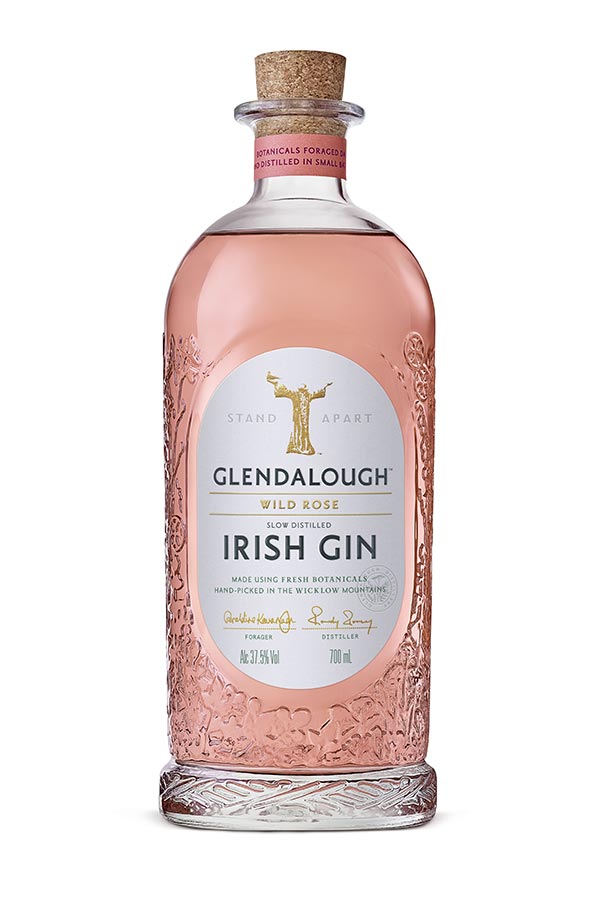
Glendalough Wild Rose Irish Gin, 37.5 per cent ABV
A pink gin that actually tastes nice, this is infused with roses from head distiller Ciaran ‘Rowdy’ Rooney’s mother’s rose garden.
It’s intensely floral with bright citrus notes and a sweet, rosy flavour.
Try it in a citrusforward spritz.
€45 from O’Briens Wines, Martin’s Off Licence and Celtic Whiskey Shop