Nearly half of Irish businesses are planning to increase investment in capital projects this year, according to the latest barometer survey from Azets Ireland.
Of the 136 firms polled by the professional services firm, 48% said they plan to increase investment compared to 37% in the UK.
Irish businesses have the highest levels of intended investment in northern Europe, with plans to increase capital expenditure by an average of 22.8% over the next 12 months, compared to 10.3% in Sweden, 9.4% in Denmark, and 8.4% in Norway.
The findings show that firms in the construction sector (29.6%) have the highest forecasted increase in investment, closely followed by businesses in the manufacturing sector (27.5%).
Small and mid-sized businesses report strong increases in intended investment, with capital expenditure rising by 28.8% among small businesses and 28.3% among mid-sized firms.
Overall, 63% of small businesses and 51% of mid-sized businesses plan on increasing investment in 2025.
Additionally, the survey reveals that 49% of businesses are using AI as part of everyday operations, as investment in AI and digital transformation accelerates.
However, 28% of Irish firms report that they have not yet adopted AI within the business, while 22% of firms are researching the technology but have not implemented it widely within their operations.
"The strong levels of planned investment, particularly in sectors like construction and manufacturing, underscore the determination of medium-sized firms to be the engines of economic growth," said Neil Hughes, CEO of Azets Ireland.
"Irish businesses are leading Northern Europe in planned capital investment, enabling them to navigate challenges from AI transformation to a tight labour market."
Irish firms are well ahead of their northern European peers in terms of succession planning, scoring 6.2 out of 10, significantly above the 5.2 average across Denmark, Finland, Norway, Sweden and the UK.
Notably, mid-sized (7.3) and small (6.5) firms buck the typical correlation between size and succession planning maturity and outperform larger and international peers, perhaps indicating more leaders in these cohorts are considering business exit strategies this year.
With a heightened risk of disruption to Ireland’s economic model in 2025 due to a shifting international trading environment, findings reveal that Irish firms have the longest average cashflow forecasting window of the six countries surveyed at 11.1 months.
Manufacturing businesses (12.3 months) have the longest forecasting window, followed by finance (11.6) and retail & hospitality (11.5).
"Findings show that succession planning is top of mind for many Irish business leaders planning for the future, particularly among small and mid-sized businesses," said Hughes.
"With changes in tax relief around the inheritance of family businesses and a new protectionist trading environment on the horizon, more leaders may now be considering whether it’s the right time for sale or succession of their business.

"From strong cashflow forecasting to investments that future proof their operations, Irish businesses are planning effectively to unlock their long-term growth potential. However, an uncertain path lies ahead.
"Leaders will need to continually review their plans for the future as they navigate rising international trade barriers and a challenging operating environment in the months ahead."
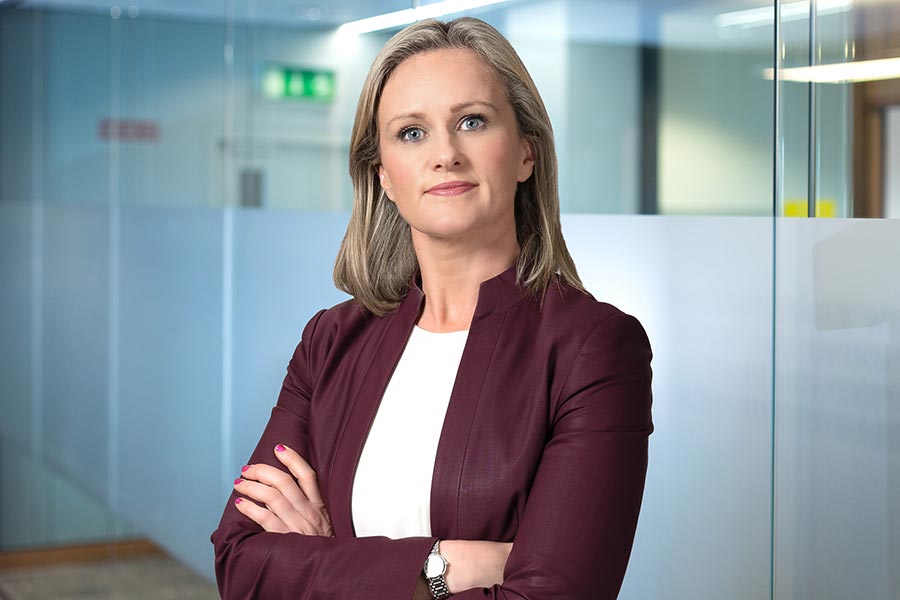
Photo: Neil Hughes. (Pic: Supplied)